Payments
How to Set Up a Decentralized Cloud VM with Aleph CLI
Deploy a decentralized VM in 10 minutes with Aleph Cloud's Rust CLI. Install, fund with USDC/ALEPH, launch Ubuntu instances for ~$10/month, and SSH in. No Python, no centralized cloud.
4 min. read -
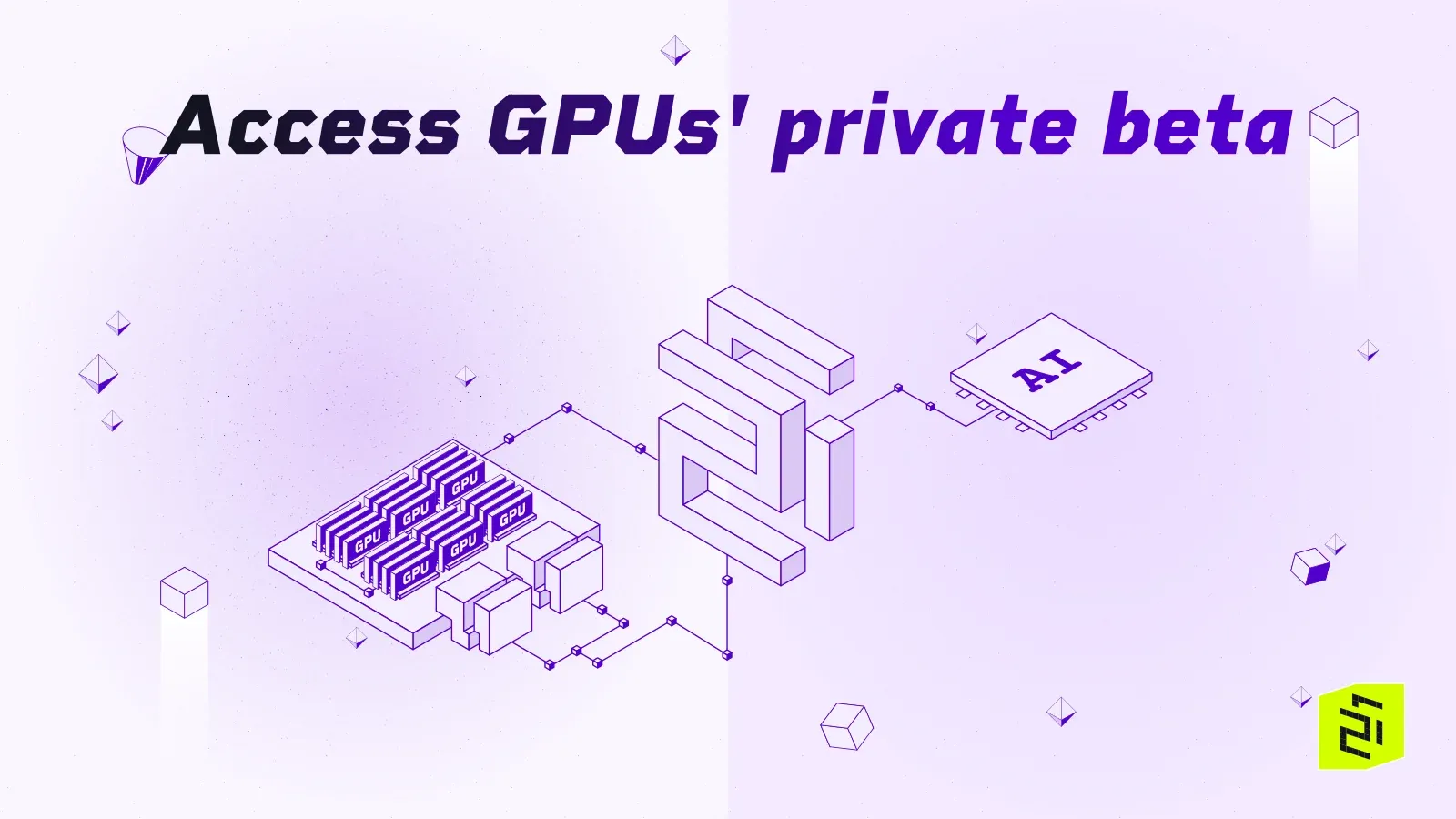
The integration of confidential decentralized computation (CDC) and GPU acceleration is transforming the landscape of secure and efficient data processing. These technologies offer a groundbreaking approach to protecting sensitive information while achieving unparalleled computational performance. By harnessing CDC to ensure data privacy and leveraging GPUs for high-speed processing, we can securely manage and analyze data across distributed networks, unlocking new possibilities for innovation.
Confidential decentralized computation, or CDC, is a paradigm shift in data processing. It enables secure computation on sensitive data without compromising its privacy. By leveraging cryptographic techniques and secure hardware enclaves, CDC ensures that data remains encrypted throughout the entire computation process, even from the computing nodes themselves. This approach mitigates the risk of data breaches and unauthorized access.
The Power of GPUs, originally designed for rendering graphics, have evolved into powerful parallel processing engines. Their ability to perform numerous calculations simultaneously makes them ideal for accelerating a wide range of computational tasks, from machine learning and scientific simulations to data mining and cryptography.
By integrating GPU acceleration into CDC, we can unlock the full potential of both technologies. This combination offers several significant advantages:
** • Enhanced Privacy:** CDC ensures that data remains encrypted during computation, while GPU acceleration can be used to perform complex cryptographic operations efficiently.
** • Improved Performance:** GPUs can significantly accelerate the execution of computationally intensive tasks, such as training large machine learning models or breaking cryptographic ciphers.
• Scalability: CDC can be scaled across multiple nodes, and GPU acceleration can be used to distribute the workload among these nodes, further improving performance and scalability.
** • Reduced Latency:** By offloading computationally intensive tasks to GPUs, we can reduce the overall latency of the computation process.
Get access to the private beta
Secure your place to use our GPU cluster before everyone else.
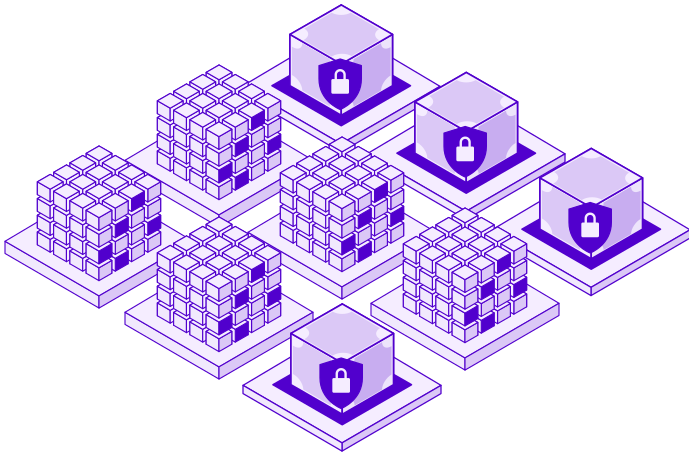
To realize the benefits of CDC and GPU acceleration, we employed a novel approach using the QEMU hypervisor and PCI-passthrough technology. This approach allows us to securely isolate GPU resources within a confidential computing environment.
** • QEMU Hypervisor:** QEMU, a versatile virtualization platform, provides a secure and isolated environment for running virtual machines. By leveraging QEMU’s capabilities, we can create a trusted execution environment (TEE) for confidential computation.
** • PCI-Passthrough:** PCI-passthrough enables direct access to hardware devices, such as GPUs, from within a virtual machine. This allows us to harness the full power of the GPU for accelerating computations within the TEE.
By combining QEMU and PCI-passthrough, we can create a powerful and flexible platform for confidential decentralized computation with GPU acceleration. This approach offers a high degree of security and performance, making it suitable for a wide range of applications, including:
• Secure AI and Machine Learning: Training and deploying machine learning models on sensitive data without compromising privacy.
• Private Data Analytics: Analyzing large datasets while preserving data confidentiality.
• Blockchain and Cryptocurrency: Securing blockchain transactions and mining operations.
• Secure Remote Rendering: Rendering complex graphics and virtual reality experiences remotely without exposing sensitive data.
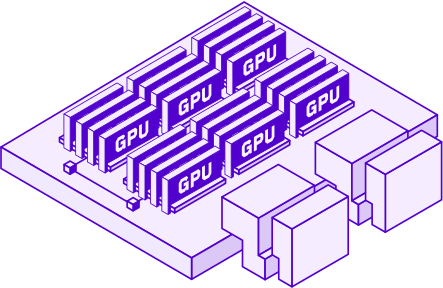
Get early access to our GPU cluster
The GPUs resources are currently on beta access only and will be live for the general public in January 2025.
The combination of confidential decentralized computation and GPU acceleration marks a pivotal advancement in secure and efficient data processing. By capitalizing on the strengths of these technologies, we can tackle pressing challenges in data privacy, security, and computational performance. Our innovative use of QEMU and PCI-passthrough offers a flexible and scalable framework, unlocking the transformative potential of secure data computation across diverse applications.
Build with Twentysix
Implement Confidential Virtual Machines today and lead the way in privacy-first computing.
Payments
Deploy a decentralized VM in 10 minutes with Aleph Cloud's Rust CLI. Install, fund with USDC/ALEPH, launch Ubuntu instances for ~$10/month, and SSH in. No Python, no centralized cloud.
Computing
Aleph tokenomics introduces a dual-stream rewards model for decentralized cloud operators: a transitional reward floor plus a usage-based revenue share.
Payments
Pay As You Go and Holder Tier payments are officially deprecated. Aleph Cloud now runs on a single credit system. Top up with USDC, fiat, or ALEPH and pay for what you use.
Virtual Machines
Explore how OpenClaw AI agents, and Aleph Cloud’s decentralized AI Supercloud are redefining autonomous computing with sovereign, censorship-resistant infrastructure.